

All Posts By
pveng
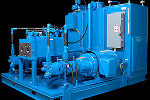
Hydraulic Systems – Canada Wide
Hydraulic systems include high pressure piping which rarely requires registration. Individual provinces with specific requirements or exemptions are discussed.
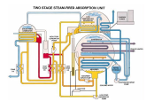
Refrigeration – Canada Wide
Each province has its own refrigeration requirements. The differences between provinces are large. Be especially careful interpreting exemptions.

Code Cases and Interpretations in Alberta
Alberta does not automatically accept either ASME code cases or Interpretations. Interpretations and code cases are not part of the code, and are not automatically adopted for use in Alberta.
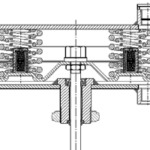
We Don’t (Usually) Register Actuators
The actuator on a valve is not part of the piping system for the fluid that the valve is regulating. It is part of the instrumentation piping system. Each province has its own piping rules, but most do not require registration of small diameter air piping systems and the actuators that are attached.
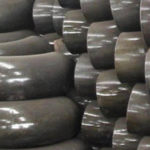
Registering B16.9 Fittings
The user of a B16.9 fitting calculates its pressure rating as an equivalent piece of straight pipe. The manufacturer of the fitting has to provide proof that the fitting is the same strength as that straight pipe. ASME Standard B16.9 does not specify wall thicknesses leaving it up to the manufacturer to design.

Using Registered Fittings in Vessels and Piping
Under the B51 program fittings need to be registered before they can be used on pressure devices. However, fittings on pressure vessels are exempted from requiring registration by B51. In contrast fittings on piping systems must be registered.

Will I Need to Renew My CRN?
CRNs for fittings expire after 10 years. If the registration is not renewed, no new pressure vessel or piping designs can be registered that use it.
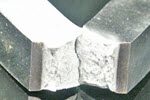
ABSA – Impact Test Information on the Drawing
ABSA requires impact test information to be put on fabrication drawings whenever impact testing is a requirement of the design.
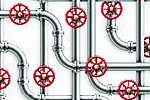
Updated CRN Requirements for Flange Welds
ASME changed the amount of weld required on standard B16.5 slip-on flanges with the 2009 VIII-1 code update. Slip-on and socket-weld flanges need larger welds on the outside.
